The Care Label: Symbols, Words and the Garment It Describes
Read care label symbols and wording together to choose a suitable washing, drying and ironing method for the whole garment, not just its fabric.
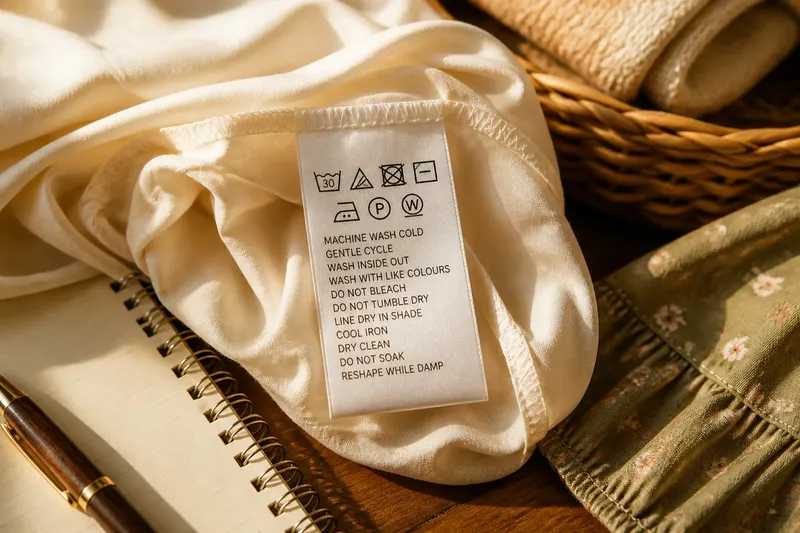
A care label gives garment-specific instructions, so care label symbols should guide your choices more than the fibre name alone. A cotton shirt may still need a cool wash or gentle handling because of its dye, finish, seams or trims. Read the permanent label from top to bottom before choosing a method.
Use each symbol and written instruction together. The label describes the finished garment, including details that a composition tag cannot show.
Where can I find the care label for my garment?
Look inside a side seam, waistband or back neck for a sewn-in label. Many garments have separate labels for fibre content and care; others combine both. A detachable swing tag may repeat care advice, but check the permanent label before discarding it.
Make sure the label belongs to the item you are about to clean. A matching top and trousers can have different linings, fastenings or finishes, so their care directions may not be interchangeable.
If the label has been removed, do not assume that a similar-looking garment has the same instructions. Check the maker’s information for the exact style if available. If you cannot confirm it, avoid irreversible treatment and seek advice suited to the materials and construction.
How do you read care label washing symbols?
The wash tub indicates whether washing is permitted. A number inside it gives the maximum temperature indicated by the label; a hand in the tub means hand washing, and a crossed-out tub means do not wash. A line beneath the tub calls for a gentler cycle, while additional lines indicate more delicate handling.
Treat a temperature as a ceiling, not a target. If a label specifies a cool wash, choosing a warmer programme because the garment is cotton ignores its specific instruction.
The wash symbol does not tell you to scrub, soak or wring the item. Follow any cycle limits and check for features such as a shaped collar or applied decoration that need careful handling.
What do the drying and bleaching symbols mean?
A square is the basic drying symbol. A circle inside it refers to tumble drying; dots indicate the permitted heat level, and a cross means do not tumble dry. Lines in a square without a circle describe natural drying: a horizontal line commonly means dry flat, while a curved line at the top indicates hanging.
Follow the specific symbol rather than treating “air dry” as a complete instruction. A knitted garment may lose its shape if hung while wet, while another item may be intended to dry on a hanger.
A triangle relates to bleaching. An empty triangle permits bleaching under the label’s conditions; a crossed-out triangle means do not bleach. A triangle marked with lines indicates oxygen bleach only, not chlorine bleach. If you are unsure what a product contains, check its packaging.
How should you read ironing and professional-cleaning symbols?
An iron symbol means ironing is permitted, with dots indicating the heat level. A crossed-out iron means do not iron; steam may also be restricted. Follow the garment’s limit even if its fibre composition seems familiar, since a blend, print or applied finish can change what is suitable.
A circle gives professional-cleaning instructions. Letters inside it tell a cleaner about the permitted process; a crossed-out circle means do not dry-clean. These marks are not directions for home solvent cleaning. If the label indicates professional cleaning, show it to the cleaner and point out any visible stain.
Say you have a wool-blend skirt with a crossed-out wash tub and a circle marked for professional cleaning. The instructions rule out home washing despite the wool content, so take it to a cleaner and show them the label.
Which care-label wording changes how you clean a garment?
Words such as “wash separately”, “wash with like colours”, “do not soak” and “reshape while damp” add directions that symbols cannot express. Treat them as part of the care instructions. “Wash separately” may matter for a strongly coloured garment; “do not soak” rules out leaving it in water even when washing is permitted.
“Dry clean only” and “professional clean” direct you away from ordinary home washing. “Do not wring” rules out twisting water from the fabric. If wording seems to conflict with a symbol, do not choose the less restrictive option without checking the maker’s instructions or asking a qualified cleaner.
Apply short instructions to the whole garment. If the label says “wash inside out”, turn it before washing. Avoid pressing delicate surface details unless the label or maker explains how.
Why can’t the fibre name decide the care method?
Can a cotton garment still need a cool wash?
Yes. The label may account for colour, finish, shape or other components that a fibre name does not describe. Follow the instruction for the finished garment rather than a generic rule for cotton.
Does “dry clean” mean every part is safe for that process?
The label identifies a permitted cleaning method, but the cleaner still needs to assess the garment’s construction and any visible stains. Point out delicate trims or other concerns when you hand it over.
What if the care-label symbols are worn or unclear?
Look for a second care label or the maker’s instructions for the exact style. If neither is available, avoid irreversible treatment and ask a professional cleaner when the item is valuable or difficult to replace.
Can you follow the instructions for a similar garment?
No. Similar appearance does not establish that garments share the same dye, finish, construction or care directions. Use the label attached to the item you are cleaning.
What should you check before choosing a cleaning method?
Scan the whole garment for attached beads, glued details, leather or metal trims, delicate prints, structured areas and contrasting colours. These features do not cancel the label, but they may raise a concern it does not address. If so, pause and check the maker’s guidance or ask a qualified cleaner.
Imagine you have a dress whose label permits a gentle machine wash and says to wash it inside out. You check that your intended cycle matches the label, close the fastenings and turn the dress inside out; those steps follow the stated instructions. Then you notice an unusual attached trim that the label does not mention. The remaining decision is to ask the maker or a professional cleaner before washing, rather than assuming the cycle instruction covers the trim.
Use this decision check before cleaning:
- Check that the permanent label belongs to this exact garment; if it does, follow it, but if it is missing or belongs to another item, look up the exact style or seek advice.
- Check whether the wash symbol permits your intended method; if it does, proceed within its limits, but if it is crossed out or unclear, do not machine-wash and check the maker’s guidance.
- Check the temperature and cycle limits; if both are clear, select a programme within them, but if either is unclear, pause and confirm the instructions.
- Check whether the drying symbol specifies hanging, flat drying or tumble drying; if the method is clear, use it, but if the symbol is unclear, avoid heat and seek garment-specific advice.
- Check for wording about colour, soaking, wringing or reshaping; if the label includes such directions, follow them, but if wording conflicts with a symbol, ask the maker or a qualified cleaner before acting.
- Check the ironing, bleaching and professional-cleaning symbols; if they permit your intended treatment, stay within their limits, but if they prohibit it, choose another permitted method or consult a cleaner.
- Check for trims or construction details the label does not address; if none raise a concern, follow the label, but if one does, pause and seek advice before cleaning.
Care label symbols and wording describe the garment as made, not just its fabric. If the instructions are unclear or a construction detail raises a separate concern, check the maker’s guidance or consult a qualified cleaner before acting.