Inside a Jacket: What the Lining Actually Does
Learn how a jacket lining affects movement, finish and fit, and what to inspect when a lining pulls, bunches or slips out of place.
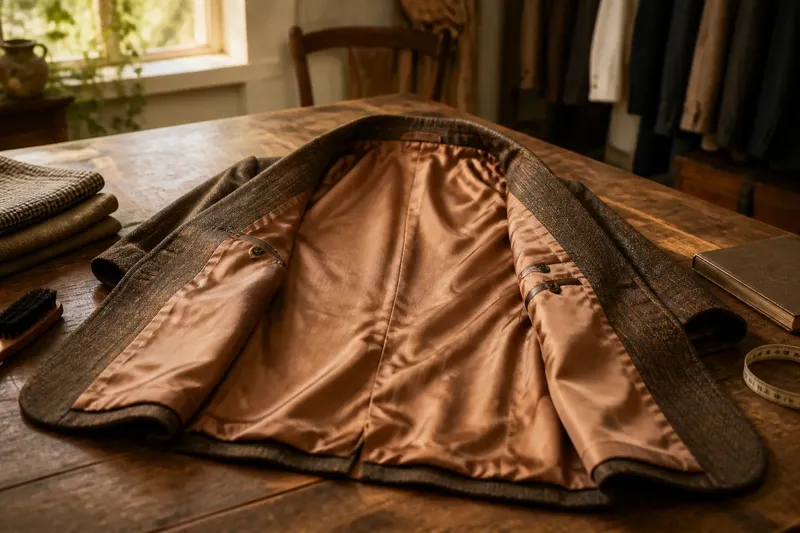
A jacket lining should let the outer cloth move over your clothes without catching, while covering seams and construction inside the garment. When a jacket feels tight, twists or shows a loose flap, the lining may be involved—but the cause can also be the fit, sleeve shape or a damaged seam. Looking at how the lining is attached helps you tell these problems apart.
A lining is the inner layer sewn into a jacket, usually from smooth woven fabric. It can cover the body, sleeves or both. It is not simply decorative: its cut and attachment affect how the jacket goes on, how it moves and how neatly its interior is finished. Use the signs below to identify what you can reasonably adjust and what needs a tailor.
Why does the lining catch when you put the jacket on?
A sleeve lining is meant to slide over a shirt or blouse. If your hand stops partway through, the fabric may be twisted, caught on a cuff, or pulled by a damaged seam. A lining that is too narrow for the sleeve can also restrict movement, though this is not something an exterior glance can confirm.
Take the jacket off and check whether the lining lies flat along each sleeve. Look for a twist, a snagged thread, a split seam, or a fold trapped at the cuff. Turn the sleeve gently from the opening only if the construction allows easy access; do not pull hard against stitching. A twisted lining may settle when the sleeve is eased back into place. A split seam or persistent restriction calls for a repair assessment.
If the sleeve catches only over a bulky jumper, compare how it behaves over a thinner layer. That distinction can point to limited ease rather than a fault. Do not assume that removing the lining will solve it: the lining may be supporting a clean interior finish, and its removal can expose seams or alter how the sleeve hangs.
Why does the jacket pull across the back?
Pulling across the shoulder blades or upper back can come from the jacket’s outer pattern, a lining that has become tight, or both. The lining should allow the back to move without acting like a second, smaller jacket beneath the shell. If it has little ease, a seam has drawn in, or the garment has been altered without adjusting the lining, reaching forward may make the whole jacket feel restrictive.
Put the jacket on over a light layer and let your arms rest naturally. Then reach forward gently, as you might to hold a bag. Notice whether the outer cloth and lining pull together or whether the inner layer seems to hold back the shell. Take the jacket off and compare the lining’s back panel with the outer back: a puckered seam or a strained line near the armhole can suggest that the inner construction needs attention.
Say you have a blazer that feels comfortable standing still but draws tight when you reach for a book on a shelf. If the lining visibly tugs at the back seam while the shell still has room, a tailor can inspect the lining ease and seam allowance. If both layers strain at the same point, the jacket’s overall fit may be the larger issue. Avoid cutting or letting out seams yourself; the available allowance and construction determine what is possible.
Why does the lining bunch or hang below the hem?
A lining that peeks out at the hem may have slipped from its attachment, stretched, or been caught in a repair. A little movement inside the jacket is normal, but a long loose flap or a lining that repeatedly rolls outside is not. The hem attachment should keep the inner layer in place while allowing the outer fabric to hang freely.
Lay the jacket flat on a clean surface and look at the hem from the inside. Check whether the lining is attached at intervals, whether a thread has broken, and whether the fabric is twisted before it reaches the edge. Do not yank the lining down to make the outside look tidy; that can put more strain on the attachment. If it is simply folded outward, smooth it back inside and see whether it stays put during ordinary wear.
If the lining keeps escaping or a seam has opened, ask a repairer to check the hem attachment. The right repair depends on how the jacket was made. A floating lining, for example, is not fixed continuously to the outer hem, so it may naturally move more than a lining that is secured along the edge.
Why does the lining feel hot, clingy or uncomfortable?
Comfort depends on the lining fibre, weave, finish, fit and the layers worn underneath. A smooth lining can help the jacket slide on, but a fabric that feels clammy to you may be unpleasant in a warm room. Static can also make a lining cling to trousers or a skirt, especially when the garment and underlayer rub against one another.
Check the fibre information on the garment label if it is available, then consider the situation in which the discomfort occurs. If the jacket feels fine over a cotton shirt but clings over a synthetic top, the combination may be contributing. If it is uncomfortable in every setting, try wearing it over a different light layer before deciding that the lining needs replacement.
Replacing a lining is a substantial alteration, not a quick comfort fix. A tailor can explain whether a different lining fabric suits the jacket’s construction and intended use. The label, maker’s instructions and local rules may affect care or alteration choices, so check them where relevant.
What should you inspect inside a jacket?
Before deciding that a lining is faulty, examine the jacket when it is off your body and lying naturally. Use good light and handle the fabric gently. Look for these specific clues:
- Seam condition: Check for split stitching, loose threads and puckering. A small opening at a seam may be repairable; widespread strain may point to fit or construction.
- Sleeve alignment: See whether each sleeve lining lies smoothly rather than spiralling or twisting. A twist that returns after you straighten it needs closer inspection.
- Back movement: Look for tight folds or drawn seams across the shoulder blades. Compare the lining and outer fabric rather than judging the lining alone.
- Hem attachment: Notice whether the lining is secured, floating or visibly detached. A loose edge that stays inside may be different from one that continually emerges.
- Armhole and shoulder area: Check for strain where the sleeves meet the body. Pulling here can involve the jacket’s fit as well as the lining.
- Pockets and vents: Look for lining caught in a pocket opening or vent, where fabric can snag during wear. Free it gently if it is not stitched in place.
Make a note of when the problem happens and where it appears. That gives a repairer a useful starting point without requiring you to take the jacket apart.
Which lining problems can you address yourself?
Simple, reversible checks are reasonable: smooth a lining back inside, release fabric caught in an opening, and try the jacket over a lighter layer to see whether bulk is contributing. Stop if the fabric resists, a seam begins to open, or the lining appears sewn into the feature you are trying to free. Pulling at a vent, pocket or sleeve can turn a minor snag into a damaged seam.
Leave seam repairs, lining replacement and changes to sleeve or body ease to a qualified tailor or garment repairer. Ask them to identify whether the issue is confined to the lining or also affects the outer shell. That distinction matters: adjusting only one layer may leave the jacket pulling or hanging unevenly.
What do people ask about jacket linings?
Does every jacket need a full lining?
No. Some jackets are fully lined, while others have partial linings or exposed interior seams finished with binding. The choice affects the inner appearance and feel, but does not by itself determine whether the jacket is well made.
Can a lining make a jacket feel too small?
It can contribute if it is tight, twisted or strained, particularly across the back or sleeves. If the outer cloth also pulls, the jacket’s overall fit may need attention as well.
Is a loose lining always damaged?
No. Some linings are designed to float rather than attach continuously to the outer hem. Look for a broken seam or persistent fabric escaping from the jacket before treating movement alone as damage.
Can I remove a lining that feels uncomfortable?
Do not remove it without first asking a garment repairer to assess the construction. The lining may cover unfinished seams or help the jacket hang as intended, and removal can change both its interior finish and movement.
When a jacket behaves oddly, start with the location of the strain: sleeve, back, hem or inner surface. That simple distinction makes it easier to describe the problem and ask for the right repair. A lining should support the jacket’s movement and finish, not conceal a fit issue that needs separate attention.